Discover a New Idea

I find it interesting that when I get intrigued by something, I am willing to put in the time and effort to learn more. It is not an unusual trait. You have probably experienced the same effect.

It starts with a new awareness. A fact that I was not aware of previously. Then I feed that curiosity with a simple search on the internet which produces a list ready to be explored.

After clicking and following a few leads, one of two things happen. Either I find my curiosity satisfied, and I am willing to move on, or I find my curiosity increasing.

As I continue to pursue more knowledge, the search process transforms into research. I find myself taking notes. I begin to organize and analyze data. Has this ever happened to you?

This can lead to taking action. Trying something new. Taking the knowledge and putting it to use.

For a thought to turn into action, and make it through all those obstacles, it must be linked to an outcome you desire. The desire for a new outcome is what allows us to dig deeper, solve problems, and tolerate mistakes. For me, and maybe for you also, only a few ideas survive this process.

It is difficult for us as human beings to change our behaviors. But yet all of our new actions or new behaviors begin with a single thought.

Usually I am intrigued by ideas that are related to my business, or my area of expertise. But sometimes inspiration comes from completely unrelated ideas.

I can tell you I am not very effective in this entire process. I am not sure anyone can be. Is our curiosity always bigger than our ability to follow through?

It only takes following through with one idea to make a huge improvement in your results. Also the time to research an idea in 2015 is a fraction of the time it would have taken in 1985. So we do research more. But do we take action faster also?

This process has lead me to be curious about how I could be more productive, yet more innovative, and even more curious than I am today.

Maybe we should do more searches, some of them even random.


What Everybody Ought to Know About Connecting

Recently I was certified in the facilitation of the Real Colors temperament assessment tool. Real Colors is grounded in the personality theory of Carl Jung, and validated by the work of Myers-Briggs, and Keirsey-Bates. Maybe you are familiar with other assessment tools like MBTI or DISC. Real Colors is a tool that is accurate, understandable, and easy to apply on a daily basis.

Why is all of that important? Your ability to communicate and connect with others is vital to your success. According to the Harvard Business Review, “The number one criteria for advancement and promotion for professionals is an ability to communicate effectively.” Leadership expert John C. Maxwell says, “Connecting is vital for any person who wants to achieve success. It is essential for anyone who wants to build great relationships.”

Knowing about temperament theory can help you identify the approach required to improve your connection with specific people. People are different in how they connect with others. People have different perspectives.

How much more effective could you be in your work life and relationships if you had more insight in how to connect, support and add value to others?

As Zig Ziglar said, “You can get everything in life you want if you help enough other people get what they want.” What if you had a better understanding of how to communicate effectively with other people?

The Real Colors workshop provides the opportunity for people to learn their own temperament preferences, and how they can better relate to others with different preferences.

If you are discussing a new problem that needs to be solved with an individual, what approach in communication would you use? Some people want you to get right to the point and discuss how to solve the problem. Some people want to understand why the problem needs to be solved, but not told how to solve it. Others want to understand how solving the problem will support the team or other people. Other people need clear and precise direction with defined organization on how to solve the problem.

Which approach is most effective? It depends on who you are are talking with.

If you knew which approach would work with different individuals wouldn’t your effectiveness improve? That is the power of Real Colors.

I am excited about helping people understand themselves, and how they can be more effective in this world. Contact me if you would like to know more about how Real Colors can help you or your organization.


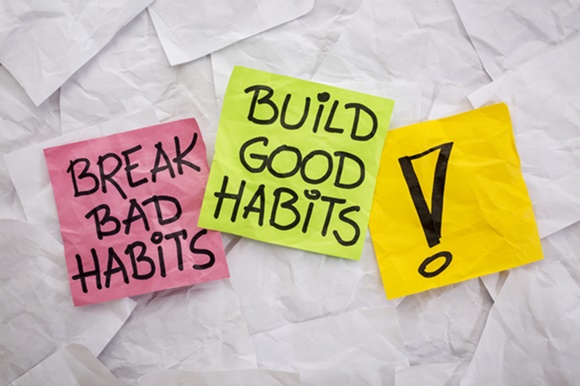
Break Your Bad Habits

I have both good and bad habits. I would really like to change that so I have only good habits. You may be feeling the same way. Our habits define our success. Not only do we desire to develop good habits, we want to squash our bad habits.

If you are ready to start, here is one plan to follow. Determine the habit you wish to break, then apply these 4 actions:

1. Define your “why”. Why is the elimination of this habit important for you? How will it change you? What will you do with the time and resources you save? Create a clear and strong desire to change. Without the internal aspiration and motivation, eliminating a habit will be nearly impossible.

2. Find a better substitute. What can you replace this habit with? Define your plan of action for when you are tempted. This can be as simple or as complex as needed. If you want to stop drinking soda, find something else to replace it, maybe green tea. If you want to reduce the time you spend watching television, use a different activity to unwind in the evenings, maybe reading. This is an opportunity to turn a bad habit into a good habit. Always substitute with something better.

3. Reflect each day on your progress and your purpose. This step cannot be skipped if you are going to succeed. Rarely is our initial desire to change strong enough for us to change overnight. The daily reflection process allows you to reinforce your desire to change. You can use it to determine if your substitute is working. You can continually invigorate yourself with your “why”.

4. Be persistent. We fail when we give up, not before. If you have a bad day, don’t give up. Keep going. To start, you need more good days than bad days. Eventually the good days will outnumber the bad days two to one, then three to one, then four to one, and so forth. Lack of persistence is the ultimate cause of all of our failures. Persistence will always win.

Just writing this article has me ready to tackle at least one of my habits. I hope you will join me in making your daily routine better. Pick a habit you are ready to kill, and let’s get started.

Why Is It So Hard to Be Intentional?

Yesterday I attended the event, Get Motivated Indy. I enjoyed the day, the speakers, the messages, the offers.  But yet, I found myself thinking about why it is so hard to stay motivated, and intentional with our actions. The speakers had everyone energized, excited, and ready to take action. Of course, we know that talking about action is easier than taking action.

I am curious about how many people will follow through with their intentions after yesterday’s event. From my experience the percent is very small. Change is a process, not an event. We can gain inspiration from the event, but that rarely turns into the motivation to make changes in our life. We often lack the persistence to stick with it. We fail to do the work. We fail to change our ideas into actions.

One of my mastermind groups just finished a 15 week study on growing through failure. Our final discussion was about how difficult it is to embrace failure and take risks, even when we know we must. We know risk is the path to success. We know growth happens outside the comfort zone. But yet, it is still hard.

Success is not easy. People want easy. What is going to motivate you to take action? What is going to motivate you through failure? What is going to give you the perseverance to learn from your mistakes?

These are questions that we should continually be asking ourselves. I know this much. It comes from within. You can’t find motivation from a speaker, a book, an event. You can find knowledge. You can find inspiration. But you will not gain motivation.

From yesterday’s event, I discovered some actions and ideas that I want to pursue. Actions I want to be intentional about accomplishing. But the motivation to follow through must come from me.

Why is this important to understand? We are bombarded by motivational messages. They are helpful, only when they touch us in a way that we have a desire to respond. If we are impacted by them, we need to search within ourselves for the motivation to act and be persistent.

How does that happen? I think our motivation is strongest when we have clarity about our purpose, our passion, our goals, our values, and our desired legacy. When we find ourselves inspired and it is aligned with what we want and who we are, we become empowered. Many people fail to become clear on what it is they want to achieve, and why they want to achieve it. Unfortunately, this prevents people from becoming highly motivated.

When you find yourself lacking motivation, what helps you get back on track?