You Can Be a World Class Mentor

Almost 25 years ago, I was assigned an employee to mentor for the very first time. I had no idea how to mentor someone, but proud and excited to be asked. I was also scared. Mentoring is not a skill that was taught in any class I took. I never received training. I was just expected to know how.

I scheduled the first meeting with my new mentee with no agenda. We were just going to meet each other and talk. My plan as a mentor was to share experiences and give advice. That is what a mentor does, right?

After the first meeting I became discouraged. I felt inadequate and worthless. I had no sense of the direction to lead my mentee. I was not sure how I could help this person.

We continued to meet, but the meetings were not productive. I struggled adding future meetings to my calendar because I had more important things to do. Activities in which I provided more value to the company than mentoring. After a few months we just stopped meeting. I had failed with my first mentee.

I am glad that over the next 25 years, I was able to develop world class mentoring skills. It would never have happened if I had not failed first. People that avoid failure, risk never experiencing the event that will positively change their life forever.

For some time, I avoided mentoring, but soon I was assigned another mentee. The second experience was better, but ultimately a failure. In fact, I continued to fail several more times. I learned from my mistakes. I sought out training. I learned more by doing than from books. I had to be willing to face my mistakes, and do the work required to improve.

Being a great mentor is not easy. There is not one single skill that automatically makes a good mentor. Good mentors have a long list of skills including listening, teaching, training, guiding, storytelling, coaching, and most importantly human personalities and motivations.

You can be a world class mentor. It requires life skills that grow through experience, failure, improvement, and practice. What lessons have you learned making you a better mentor? Have you learned more from a book, or by practice? What are you learning now, that will make you a better mentor?

 

The Pace of Success

I have been thinking about the pace of life. If you are like me, when things are moving too fast, you may feel stressed. But if things seem too slow, well you can also feel stress (or boredom, lack of accomplishment, etc). Life seems to have an appropriate pace.

Ralph Waldo Emerson said, “Adopt the pace of nature: her secret is patience.”

Even when we are pushed to go faster in this time of instant gratification, I find that a slower pace when constant usually pays bigger dividends. It is persistence and perseverance that makes a difference.
A slower pace does not mean less work. The settlers that came to the United States over two hundred years ago found success through hard work. Imagine raising and growing your own food, making your own clothes, trading with your neighbors, and cutting wood for heat. The pace of life was much slower, but not easier.

Each of us has a different pace that is right for us. We are forged by our environment, but our environment changes over time. If we are not aware of our own internal pace, we risk losing our sense of grounding that helps us through the stress caused by the pace around us.

What pace is right for you? How do you maximize productivity without increasing stress?

Doing Nothing Is Not Really an Option

Have you ever stood still in a river and felt the water rush by you? The water can be a gentle push against you, or it can be forceful. It can cause you to lean, struggling to stand upright.

There are days when I feel time rushing by like the water in a river. In reality, time is always moving like the Earth is always moving. The Earth is traveling through space at 66,000 miles per hour. And at the same time, the Earth rotates on its axis faster than 1000 miles per hour.

Maybe the fact that life moves so fast has made me love the times when I can just sit and think. I love being able to ignore all the outside activity and demands of daily life.

However, even though we can ignore it, the fast pace never goes away. I have discovered it is important to embrace the pace, the changes, and the obstacles that life throws at us.  They are just as important as the quiet times.

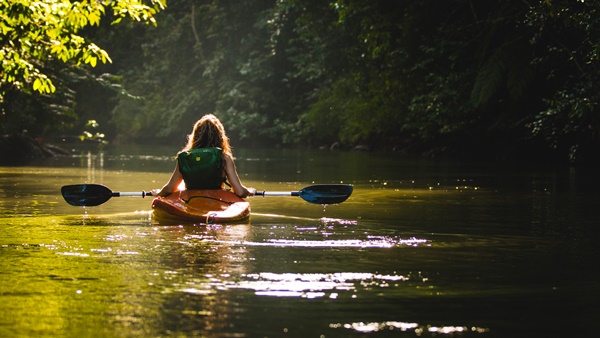
Instead of standing in the river, imagine being in a kayak. No longer are we trying to resist the current. Instead we strive to control our kayak. We paddle. We steer.

We decide to guide our kayak. We cannot stand still. Doing nothing is not an option. Life is moving. We can make every day count.

Stop Interrupting and Listen

When I find myself interrupting a conversation, it is usually because I am excited to make an observation, a point, or share my opinion. But I have learned that what is important to me, may not be important to the other person.

I hate to be interrupted before I am able to finish my thoughts. Others are too. So why do we tend to do it so often? For me it seems to happen more with people that I know well. In my head I can finish their thoughts, so I don’t listen as closely.

To become a better listener, I had to make an effort not to interrupt. I had to stop finishing other people’s sentences. I had to focus intently on their words, not my thoughts.

The most important lesson I learned was that in many conversations, people just want someone to listen. The topic of the conversation is not even important. They just wanted to be heard.

We can all be better listeners. It starts with being quiet.

“When you interrupt, you’ve stopped listening. People need to be heard.” – Jerry Seinfeld